Whole-home and critical-load battery backup, installed by licensed electricians. Works with new solar, existing solar, or no solar at all — and Connecticut will help pay for it.
A battery isn't about running every light in the house like nothing happened — though it can do that too. It's about the loads you genuinely can't lose. We wire those in first.
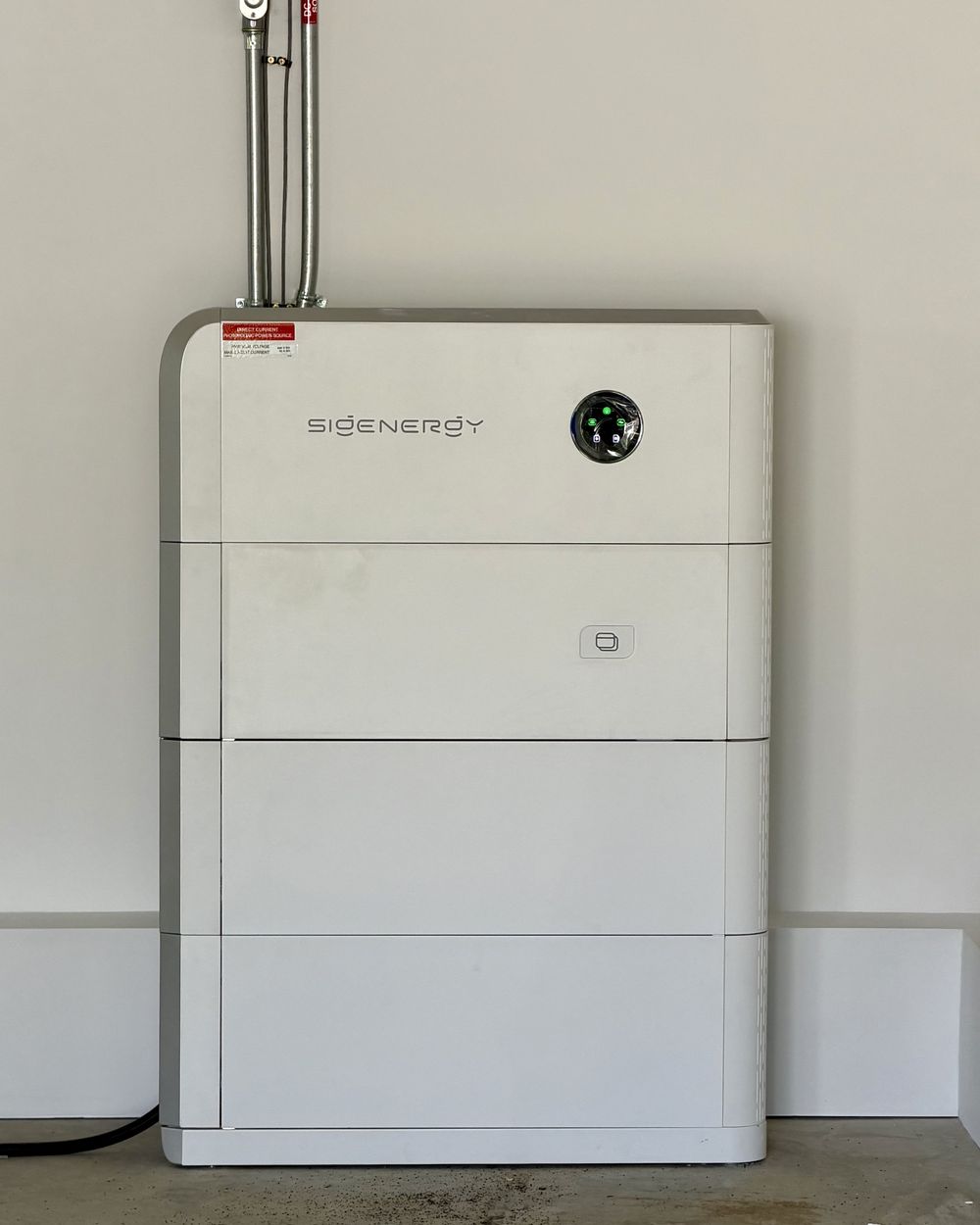
We install both, so we don't have a horse in this race. Here's how they actually stack up.
| Home Battery | Standby Generator | |
|---|---|---|
| Fuel | None. Charges from solar or the grid. | Propane, natural gas, or diesel — and a fuel bill every outage |
| Noise | Silent. Your neighbors won't know you have power. | A lawnmower bolted to the side of your house, running all night |
| Maintenance | Essentially none — no oil, no filters, no annual service contract | Oil changes, filters, weekly self-test cycles, yearly service |
| Switchover speed | Instant — clocks don't even blink | 10–30 second gap while the engine starts |
| Recharges from solar | Yes — can run indefinitely in a multi-day outage with sun | No — runs until the fuel runs out |
| Indoor air safety | Zero emissions, zero carbon monoxide risk | Combustion exhaust — placement and CO detectors matter |
| Incentives | CT Energy Storage Solutions + every incentive you qualify for | None |
Honest footnote: generators still make sense for some homes — very large loads, no solar, long rural outages with no sun. We install those too, as part of our electrical services. We'll tell you straight which one fits your house.
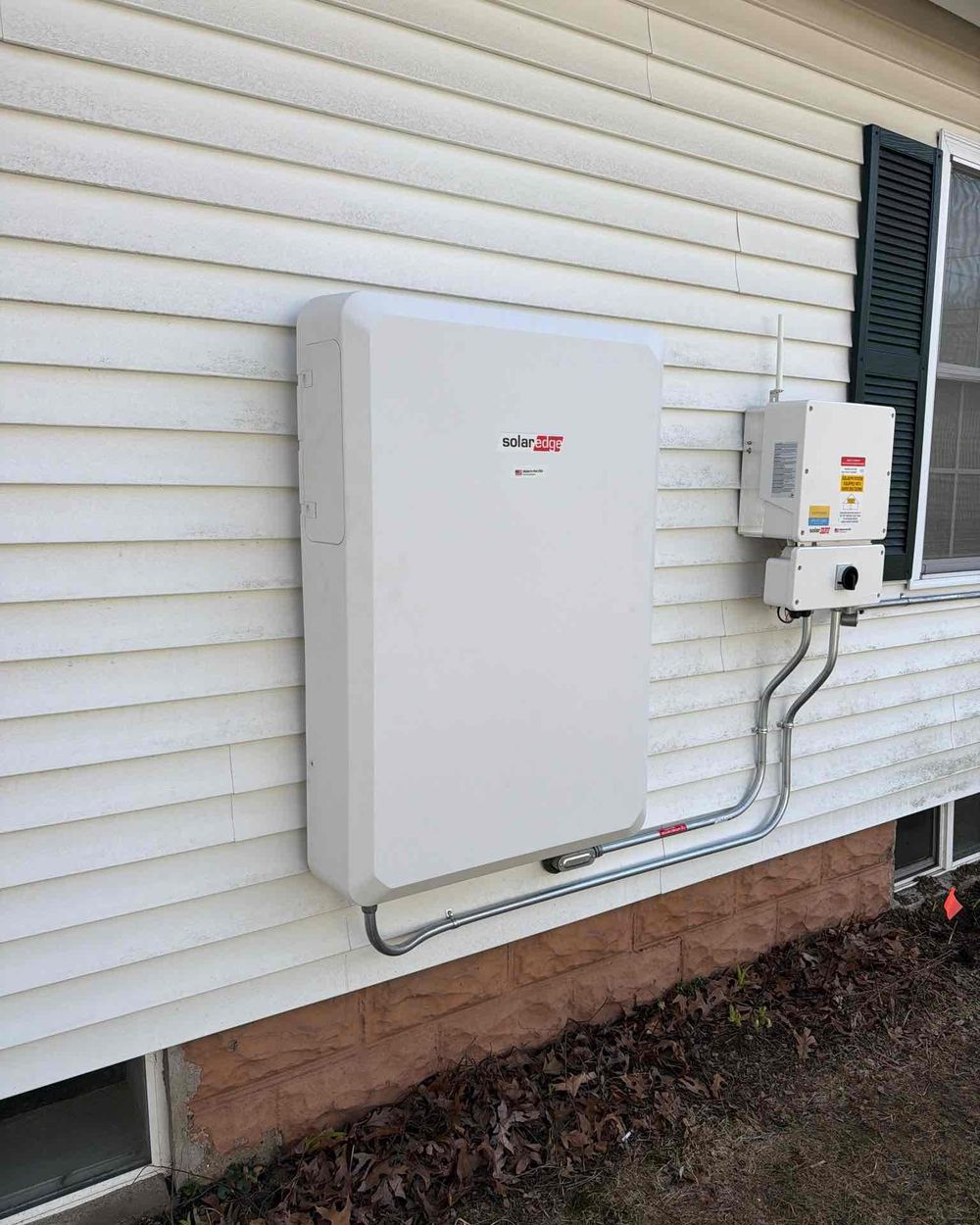
Paired with solar, a battery stops being just an emergency device and starts working every single day.
Battery sizing is where homeowners get oversold. Here's how we actually do it.
We move your must-have circuits to a dedicated backup subpanel. A smaller, cheaper battery runs everything that matters for a long time. This is the right answer for most homes.
The whole panel rides through the outage — nothing changes except the streetlights. Needs more battery and sometimes a service look, but it's seamless. Great for well-and-septic homes with electric heat.
A smart electrical panel sheds low-priority loads automatically when reserves drop — so a modest battery acts like a big one. See our smart home page for how that works.
We model your actual usage — your panel, your loads, your utility data — not a number off a sales brochure. If a smaller battery does the job, that's the one we'll quote.
Home batteries can qualify for incentives whether or not you have solar. The CT Energy Storage Solutions program pays an upfront incentive plus ongoing performance payments through Eversource or UI for letting your battery support the grid on peak days, and we make sure you capture everything else you qualify for. We handle the enrollment paperwork as part of every install — you just cash the checks.
A licensed electrician — not a salesperson — looks at your panel, your loads, and your outage history, and asks what you actually need to keep running.
We size the system, pick the right ecosystem for your solar (or lack of it), and file your Energy Storage Solutions enrollment and any other incentive paperwork you qualify for.
Battery mounted, backup panel wired, system commissioned and inspected. Usually one day, sometimes two for whole-home setups.
You barely notice. The clocks don't blink, the fridge hums along, and your neighbor's generator provides the soundtrack.
Honest answer: it depends entirely on what you're running. A typical home battery (around 10–13 kWh usable) will run a critical-loads panel — fridge, heat circulation, well pump, lights, Wi-Fi — for roughly 12 to 24 hours on its own. Add solar and it recharges every day, so a critical-loads setup can ride out a multi-day outage indefinitely if the sun cooperates.
Trying to run central AC and an electric dryer off one battery? A few hours. That's why we do a real load assessment instead of quoting "up to 3 days!" like some brochures do.
Usually, yes — even if we didn't install the original system, and even if your installer no longer exists. Some setups take an AC-coupled battery with almost no changes; others need an inverter swap to do it right. We'll evaluate your existing system, tell you which camp you're in, and quote both honestly. SolarEdge, Enphase, SMA, Fronius — we work on all of them every week.
If you have (or are getting) solar, a battery wins for most homes: silent, instant, zero maintenance, recharges itself, and CT pays you incentives a generator never gets. A generator still makes sense if you have very large loads, no solar, and long rural outages where days of cloud are likely. We install both — see our electrical services — so the recommendation you get is the right one for your house, not the one we happen to sell.
It's Connecticut's statewide battery incentive program, run through Eversource and United Illuminating. You get an upfront incentive that lowers the install cost, plus performance payments over time for letting your battery discharge a bit to support the grid on a handful of summer peak days. Your backup reserve stays protected. We handle the entire enrollment as part of the install.
Garage and basement walls are the most common spots — near your main panel keeps wiring clean and cost down. Most modern units are also rated for outdoor mounting if indoor space is tight. They're about the size of a small water heater flattened against the wall, they're quiet, and code dictates clearances and placement — which is exactly the kind of thing you want a licensed electrician deciding, not a subcontractor with a tape measure and optimism.
With solar: the battery powers the house overnight, the panels recharge it during the day, and the cycle repeats — homes with right-sized critical-load setups have ridden out week-long outages this way. Without solar: you get one battery's worth, so we size the reserve to your real must-run loads and set the system to stretch it. Either way, the monitoring app shows you exactly how much runway you have, in plain numbers.
Not a brochure number — a real assessment of your panel, your loads, and your incentives, from a licensed electrician. No pressure, no commissioned salespeople.
Get a Backup Assessment (860) 426-7283