Rooftop and commercial-scale projects across New England — engineered, installed, and maintained by licensed electricians. One contractor accountable for the array, the interconnection, and every kilowatt-hour after.
If your facility has roof space and a meaningful electric bill, the math is usually worth running. We've run it for all of these.
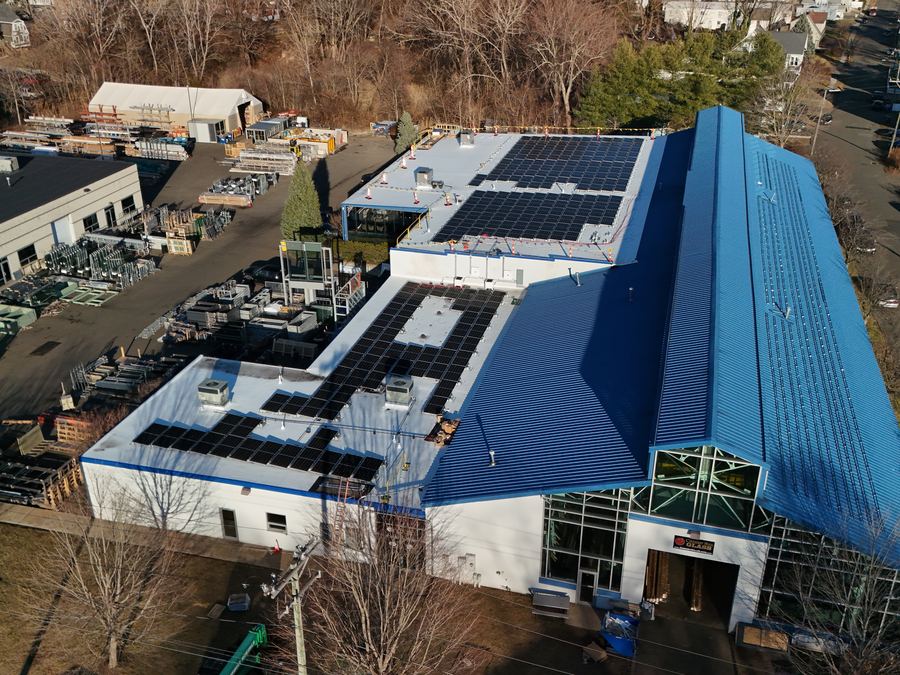
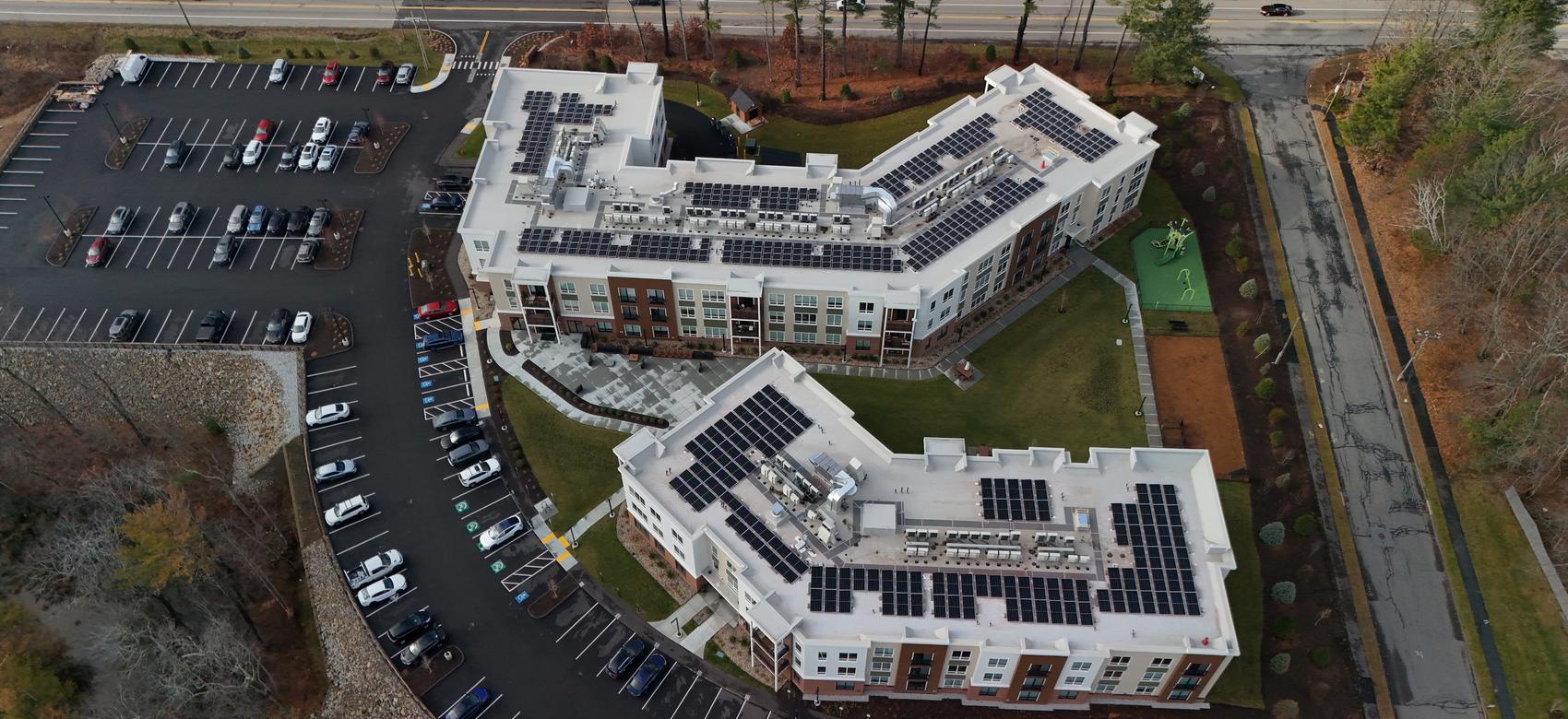
Large, unobstructed roof planes and daytime loads — the ideal commercial solar profile. Ballasted or attached racking, designed around your roof membrane and warranty.
Demand charges and daytime HVAC make these buildings strong candidates. We schedule installation around your business hours, not ours.
Barn roofs, ground mounts on marginal acreage, and three-phase service in places the utility forgot about. Agricultural electrical work is old territory for us.
Plenty of companies can put modules on a roof. Commercial projects live or die on the electrical engineering, the utility process, and what happens in year 25. That's where we're different.
An underperforming commercial array bleeds money quietly. Our O&M practice exists so yours doesn't — whoever built it.
Scheduled inspections: torque checks, thermal imaging, connector and combiner inspection, racking and roof penetration review. Findings documented, fixes quoted plainly.
String and central inverter diagnostics, warranty repairs, and end-of-life replacements across SolarEdge, Enphase, SMA, and Fronius platforms.
Original installer gone, unresponsive, or out of the O&M business? We take over commercial systems we didn't install — full assessment, documentation rebuild, and a maintenance plan going forward.
Commercial timelines are driven by utility queues and AHJ schedules. We tell you the real dates at every stage — and we've never met a facility manager who preferred the optimistic version.
Roof condition, structural capacity, interval data from your utility, and rate schedule analysis. You get a go/no-go with real numbers.
Full electrical and structural design, stamped where required, plus AHJ permits and the utility interconnection — all managed in-house. The longest stage, and we keep you posted.
Our own electrical crews, scheduled around your operations. Safety plans, daily cleanup, and a foreman you can actually find.
Full commissioning tests, as-built documentation, monitoring setup, and a maintenance plan — with the same crew on the other end of it.
Commercial solar stacks serious financial levers: federal incentives, MACRS accelerated depreciation, and Connecticut's Non-Residential Renewable Energy Solutions program with its long-term, fixed-rate compensation. Together they routinely compress payback into a window most capital projects can't touch. We model every incentive you qualify for against your actual rate schedule and put it in a format your accountant can work with directly.
From signed contract to permission to operate, plan on six to twelve months depending on system size, the utility interconnection queue, and your town's permitting pace. The physical installation is usually a matter of weeks — the paperwork is what takes time, and any contractor who tells you otherwise hasn't done many of these.
What we control, we compress: design, submittals, and crew scheduling move fast because they're all in-house. What we don't control, we manage aggressively and report on honestly.
The array will be up there for 25-plus years, so the roof under it should have meaningful life left — generally 10+ years remaining, or a plan to re-roof first. We assess membrane condition and structural capacity during feasibility, and we coordinate with your roofing contractor and roof warranty terms before a single ballast block goes down.
If the honest answer is "re-roof first," we'll tell you at the feasibility stage, not after mobilization.
Yes — it's a significant part of our commercial work. Many Connecticut commercial arrays were installed by companies that have since exited the market or the region, leaving owners with no service path. We perform a full takeover assessment, rebuild the documentation, address outstanding issues, and put the system on a regular maintenance plan.
We service SolarEdge, Enphase, SMA, and Fronius equipment, among others. If your array is underproducing or simply unserviced, start with a system assessment.
Our sweet spot is commercial rooftop and ground-mount projects from small business installations up through warehouse-scale arrays — the range where having licensed electricians on the crew matters more than having a procurement department. For portfolio owners, we handle multiple buildings under a single design standard and O&M contract.
If a project is genuinely outside our lane, we'll say so in the first conversation rather than learn it on your roof.
Under Connecticut's Non-Residential Renewable Energy Solutions program, your system's production is compensated through a long-term tariff — either as a buy-all arrangement or as netting against your usage, depending on the structure that fits your load profile. The fixed-rate, multi-decade term is what makes the financial modeling unusually predictable for a capital project.
Which structure wins depends on your rate schedule, demand charges, and load shape. That analysis is part of our feasibility study — and it's the page your CFO will read first.
A feasibility study with real numbers: production modeling, incentive stack, and payback against your actual utility bills. No glossy proposal theater.
Request a Site Assessment (860) 426-7283